Anticipating You: The Rise of Predictive AI and the Ethics of Knowing the Future

Photo: artificial intelligence predictive analytics data visualization futuristic, via img.freepik.com
There is a particular kind of unease that arrives when a recommendation appears so precisely calibrated to your current state of mind that it seems less like an algorithm and more like a mirror. Most Americans have felt it—the product suggestion that arrives at exactly the right moment, the news article that surfaces just as the topic crosses your mind. These experiences are not coincidences. They are the visible edge of a predictive infrastructure that extends far deeper than most users appreciate.
Predictive artificial intelligence—systems trained to anticipate human behavior before it is expressed—has matured rapidly over the past decade. What began as relatively coarse statistical modeling of consumer preferences has evolved into something considerably more precise and, depending on one's perspective, considerably more troubling.
The Science Behind the Forecast
Modern behavioral prediction draws from an intersection of machine learning, cognitive psychology, and large-scale data aggregation. The foundational insight, validated repeatedly in academic literature, is that human behavior is far more patterned and far less spontaneous than individuals tend to believe. Research by psychologists including BJ Fogg at Stanford and the late Daniel Kahneman has demonstrated that a substantial proportion of daily decisions are governed by automatic, subconscious processes rather than deliberate reasoning.
AI systems exploit this predictability by identifying correlations across enormous data sets—correlations that no human analyst could detect manually. A model trained on millions of consumer records may discover that individuals who purchase a specific combination of household items, at a particular point in the week, are statistically likely to be experiencing a life transition. It does not need to understand why. The pattern is sufficient.
Large language models and transformer-based architectures have added a new dimension to this capability by enabling systems to process unstructured behavioral signals—the rhythm of text input, the linguistic register of messages, the sequence and duration of content engagement—and translate them into probabilistic behavioral profiles.
Where Predictive AI Is Already Operating
The deployment of predictive behavioral AI is not a future scenario. It is a present reality, embedded in the infrastructure of daily American life.
In retail and e-commerce, companies including Amazon and Walmart have developed demand forecasting systems that predict individual purchasing behavior with sufficient confidence to initiate logistics processes—warehouse staging, delivery routing—before a customer has completed a transaction. Amazon has patented a concept it describes as anticipatory shipping, in which goods begin moving toward a geographic area based on predicted purchases.
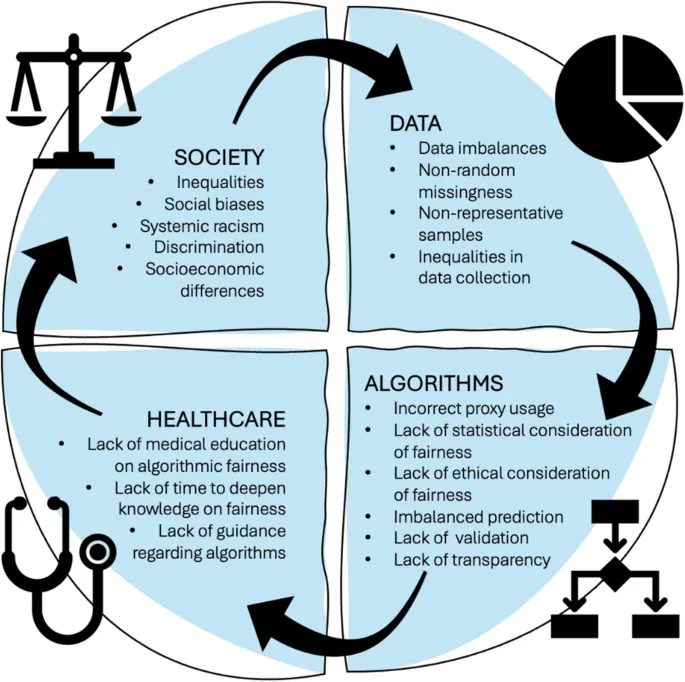
In healthcare, predictive models are being used to identify patients at elevated risk of hospital readmission, medication non-adherence, and mental health crises. Tools such as the Duos AI platform and various electronic health record integrations analyze behavioral and clinical signals to flag individuals who may need proactive intervention. The potential public health benefits are real; so are the risks of algorithmic misclassification and the discriminatory application of risk scores.
In the financial sector, credit risk models have long incorporated behavioral proxies. More recent systems analyze real-time spending patterns, geolocation data, and even social network associations to generate dynamic creditworthiness assessments that update continuously rather than at fixed intervals.
Perhaps most consequentially, law enforcement and national security agencies have invested substantially in predictive policing tools and social movement forecasting systems. Programs such as PredPol—now rebranded as Geolitica—have been deployed in cities across the United States to predict the geographic distribution of criminal activity. Critics, including the Stop LAPD Spying Coalition and civil liberties organizations, have documented how these systems tend to concentrate surveillance in communities of color, encoding and amplifying existing inequities.
The Autonomy Problem
At the philosophical core of predictive AI lies a tension that no technical refinement can resolve: if a system can accurately predict your choices before you make them, what does that imply about the nature of those choices?
This is not a purely academic question. When a platform knows, with high probability, that you are susceptible to a particular persuasive message at a particular moment, and it delivers that message accordingly, the boundary between prediction and manipulation becomes difficult to locate. The system is not merely observing a future that would have occurred anyway. It is participating in the construction of that future.
Behavioral economists call this the "nudge" dynamic—the use of environmental design to steer decisions without explicit coercion. At the scale and precision enabled by modern AI, the nudge becomes something qualitatively different. It becomes, in the view of scholars such as Shoshana Zuboff, whose work on surveillance capitalism has shaped this debate, a form of behavioral modification operating largely beneath the threshold of conscious awareness.
Regulatory Frameworks Are Struggling to Keep Pace
The governance infrastructure surrounding predictive AI remains fragmented and inadequate relative to the technology's current capabilities. The European Union's AI Act, which entered into force in 2024, establishes a tiered risk classification system and imposes restrictions on certain categories of predictive application, including real-time biometric surveillance and social scoring. The United States has no comparable federal statute.
The Biden administration's AI Bill of Rights, published in 2022 as a non-binding framework, articulated principles including protection from algorithmic discrimination and the right to opt out of automated decision systems. The subsequent executive orders on AI issued by both the Biden and Trump administrations have addressed national security and economic competitiveness dimensions of AI governance without establishing enforceable individual rights around behavioral prediction.
A coalition of researchers, civil society organizations, and some technology industry voices has called for mandatory impact assessments before predictive systems are deployed in high-stakes domains, algorithmic auditing requirements, and explicit prohibitions on the use of behavioral prediction in contexts such as employment screening and criminal adjudication without meaningful human oversight.
The Infrastructure of Anticipation
It is worth considering predictive AI not merely as a product category but as an infrastructure—a layer of computational capacity built into the systems that govern access to credit, healthcare, employment, information, and public safety. Infrastructure shapes the conditions of possibility for everyone who depends on it. When that infrastructure is optimized for prediction and behavioral influence, its effects are not neutral.
The question confronting American society is not whether predictive AI will continue to develop. The technical trajectory is clear, and the economic incentives are overwhelming. The question is whether the deployment of that capability will be governed by frameworks that protect individual autonomy and democratic accountability, or whether it will proceed according to the interests of the institutions that currently control it.
At Lucent Space, we hold that illuminating the architecture of emerging technology—including its less visible dimensions—is a prerequisite for the informed public deliberation that consequential choices demand. Predictive AI is not a distant horizon. It is the present, and it is already anticipating your response.