Powering the Cloud: The Staggering Energy Toll of Modern Data Centers and the Technologies Racing to Fix It
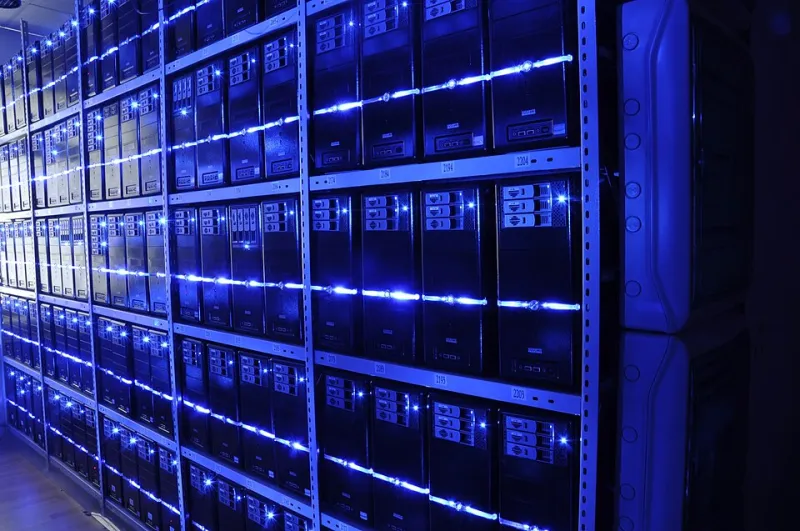
Photo: BalticServers.com, CC BY-SA 3.0, via Wikimedia Commons
Every time an American streams a film, runs a generative AI query, or backs up a smartphone to the cloud, a silent transaction takes place — one measured not in dollars, but in kilowatt-hours. Data centers, the physical backbone of the digital economy, consumed an estimated 200 terawatt-hours of electricity in the United States alone in 2023, a figure that the Department of Energy projects could more than double by the end of this decade. The convenience of the cloud, it turns out, carries a significant environmental price tag.
Yet within this mounting challenge, a wave of innovation is reshaping what it means to build and operate digital infrastructure responsibly. From liquid immersion cooling to intelligent lighting ecosystems, the facilities that power our connected lives are becoming laboratories for some of the most forward-thinking engineering of our era.
The Paradox at the Heart of Digital Convenience
Cloud computing has long been marketed as a kind of invisible, frictionless utility — a resource as reliable and unremarkable as running water. What that narrative obscures is the sheer physical enormity required to sustain it. A single hyperscale data center can draw between 100 and 200 megawatts of power continuously, enough to supply electricity to tens of thousands of American homes.
The rapid expansion of artificial intelligence workloads has intensified this pressure considerably. Training large language models and running inference at scale demands far more computational density than traditional enterprise applications, pushing power usage effectiveness (PUE) — the standard metric for data center energy efficiency — in the wrong direction at many facilities.
"We spent years optimizing for latency and throughput," noted one sustainability engineer at a major colocation provider in Northern Virginia, speaking on background. "Now we're being asked to also optimize for watts consumed per useful computation. Those goals don't always align neatly."
Northern Virginia, which hosts the largest concentration of data centers in the world, exemplifies the tension. Local utilities have warned of strain on the regional grid, and several counties have moved to restrict new data center development pending infrastructure upgrades. The situation is being closely watched by planners in other major US markets, including Phoenix, Dallas, and the Chicago suburbs.
Cooling: The Largest Single Energy Drain
Of all the systems operating within a data center, cooling consistently accounts for the greatest share of energy consumption — often between 30 and 40 percent of total facility power draw. Traditional air-cooling architectures, which rely on computer room air conditioning units and raised floor plenum systems, were designed for an era of far lower rack densities. They are increasingly inadequate for modern GPU-dense deployments.
Liquid cooling has emerged as the most promising alternative, and adoption is accelerating. Direct liquid cooling (DLC) routes chilled water or dielectric fluid directly to heat-generating components, removing thermal energy far more efficiently than moving air can. Immersion cooling, a more radical approach, submerges entire servers in non-conductive fluid baths, achieving PUE values approaching 1.03 — compared to an industry average closer to 1.5.
Companies such as Vertiv, Submer, and GRC are competing aggressively in this space, with deployments appearing at facilities operated by major cloud providers and financial institutions alike. Microsoft's recent announcement of immersion-cooled infrastructure in support of its Azure AI services signals that the technology has moved decisively beyond the experimental phase.
Geothermal and ambient cooling strategies are also gaining traction. Data centers in the Pacific Northwest are leveraging naturally cool outdoor air through economizer modes for significant portions of the year, while facilities in Iceland and Scandinavia have long exploited geothermal resources. As US operators face regulatory and community pressure, similar geographic and geological strategies are being reconsidered for domestic deployment.
Illuminating Efficiency: Why Lighting Infrastructure Is More Than an Afterthought
While cooling dominates the energy conversation, the role of intelligent lighting infrastructure within data centers is receiving renewed attention — and for good reason. Legacy fluorescent lighting in server halls and support spaces contributes meaningfully to overall facility load, and the conditions those systems create can affect both human performance and equipment reliability.
Advanced LED systems with occupancy-based controls and tunable spectral outputs are being integrated into next-generation facility designs, reducing lighting-related energy consumption by as much as 60 percent compared to conventional approaches. More significantly, smart lighting platforms that communicate with building management systems can provide real-time data on space utilization, helping operators identify underused zones and redistribute cooling resources accordingly.
"Lighting is a data source as much as it is an energy consumer," explained one facilities engineer involved in a major data center retrofit project in Texas. "When your lighting infrastructure is intelligent, it feeds into a broader picture of how the building is actually being used."
This integration of illumination and operational intelligence reflects a broader shift in how the industry conceptualizes infrastructure — not as a collection of isolated systems, but as an interconnected, data-driven environment.
Renewable Energy and the Road to 2030
Beyond efficiency gains at the facility level, the data center industry is under mounting pressure to address the carbon intensity of the electricity it consumes. Major hyperscalers — Amazon Web Services, Google Cloud, and Microsoft Azure — have made high-profile commitments to power their operations with 100 percent renewable energy, though the specifics of how those commitments are measured and fulfilled remain a subject of debate among environmental advocates.
Power purchase agreements (PPAs) with wind and solar developers have become a standard tool, allowing operators to claim renewable attribution for grid-delivered electricity. Critics argue that these instruments do not always correspond to real-time clean energy consumption and that the additionality of new generation capacity is not always guaranteed.
More rigorous approaches are gaining momentum. Twenty-Four Seven clean energy matching — ensuring that every hour of electricity consumed is matched by an hour of carbon-free generation — is being piloted by Google and others as a more credible standard. The Biden administration's data center sustainability initiative, which set voluntary targets for federal and commercial operators, has helped elevate these metrics within procurement and contracting conversations.
By 2030, analysts at Wood Mackenzie and BloombergNEF project that the combination of improved hardware efficiency, advanced cooling deployment, and renewable procurement will substantially reduce the carbon intensity of US data center operations per unit of computation — even as total power demand continues to grow in absolute terms.
The Infrastructure Imperative
The data center industry's energy challenge is not merely a technical problem. It is a test of whether the digital economy can scale in a manner consistent with broader societal commitments to environmental responsibility and grid stability. The infrastructure choices being made today — in cooling architecture, facility design, energy sourcing, and operational intelligence — will shape the carbon profile of American digital life for decades.
The organizations that treat this challenge as an opportunity for genuine innovation, rather than a compliance burden, are positioning themselves at the forefront of a transformation that extends well beyond the server room. In a sector defined by its ability to process and transmit light-speed information, the quality and sustainability of the physical infrastructure that makes it possible has never mattered more.