Code Written in DNA: How Synthetic Biology Is Engineering the Living Computer
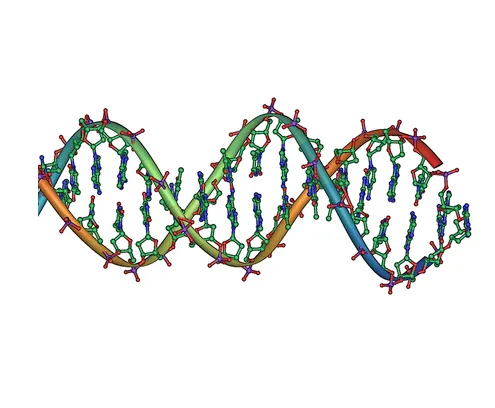
Photo: Jerome Walker, Public domain, via Wikimedia Commons
The transistor was a revolution in miniaturization. What synthetic biologists are proposing is something fundamentally different: not smaller switches, but living ones.
Across university laboratories and venture-backed startups from Boston to the Bay Area, a convergence is underway between two disciplines that once had almost nothing to say to each other. Computer scientists and molecular biologists are collaborating to build computational systems from biological components—DNA strands, engineered proteins, and modified microorganisms that can store information, execute logical operations, and even adapt to their environments in ways no silicon chip ever could. The implications span medicine, data infrastructure, materials science, and national security. So do the risks.
The Logic of Life
At its most fundamental level, computing is the manipulation of information according to rules. Silicon-based computers do this through the movement of electrons across semiconductor gates. Biological systems, it turns out, have been doing something structurally analogous for billions of years—just with molecules instead of electrons.
DNA, the double-helix polymer that encodes the instructions for every living organism, is also a remarkably efficient information storage medium. Microsoft Research and the University of Washington demonstrated in 2019 that a single gram of DNA can theoretically store approximately 215 petabytes of data—roughly equivalent to the entire content of the internet at the time of the experiment. Unlike magnetic hard drives or flash storage, DNA does not degrade under the right conditions for thousands of years and requires no power to maintain its encoded information.
But storage is only one dimension of biological computation. The more ambitious frontier involves programming living cells to perform active logical operations—to receive molecular inputs, process them according to engineered pathways, and produce measurable outputs. In other words, to function as computers made of flesh.
Engineering the Cell as Processor
Synthetic biology's toolkit for building cellular computers has expanded dramatically over the past decade. CRISPR-based genetic circuits allow researchers to create programmable gene regulatory networks that behave like digital logic gates—AND gates, OR gates, NOT gates—using transcription factors and RNA molecules as their operational currency. A cell engineered with such a circuit might, for example, detect two simultaneous molecular signals (AND), produce a therapeutic protein only in their combined presence, and self-terminate once a threshold output has been reached.
Researchers at MIT's Department of Biological Engineering have constructed multi-layer genetic circuits capable of executing sequential computations inside living bacterial cells. A team at Boston University demonstrated a biological toggle switch—a cellular memory element that holds a binary state until deliberately flipped—that functions with remarkable stability across generations of cell division.
More recently, the concept of DNA strand displacement computing has attracted significant investment. In this approach, computation occurs entirely outside living cells, through carefully designed sequences of synthetic DNA that interact according to programmed rules. Each strand displacement reaction is equivalent to a logical operation, and cascades of such reactions can solve complex mathematical problems—including, in proof-of-concept demonstrations, versions of the graph coloring problem that challenge conventional algorithms.
Commercial Horizons
The translation from laboratory curiosity to commercial application is proceeding along several parallel tracks in the United States.
In data archiving, companies including Twist Bioscience (South San Francisco) and Catalog Technologies (Boston) are developing DNA synthesis and sequencing pipelines designed for enterprise-scale data storage. The target market is the vast, cold-storage tier of the data economy—archives that must be preserved for decades but rarely accessed—where DNA's density and longevity offer compelling economic advantages over tape or disk-based systems. Catalog has already demonstrated encoding and retrieving entire Wikipedia databases in DNA form.
In medicine, the intersection of synthetic biology and computation is generating a class of devices known as "smart therapeutics"—engineered cells capable of diagnosing disease states and administering treatment in a single integrated process. CAR-T cell therapy, already approved by the FDA for certain blood cancers, is an early expression of this concept. Next-generation versions under development at institutions including the University of Pennsylvania and the Salk Institute incorporate genetic logic circuits that allow the therapeutic cells to distinguish between healthy and diseased tissue with far greater precision, reducing the off-target toxicity that limits current immunotherapies.
Agricultural biotechnology firms are exploring engineered soil microbiomes that can process environmental sensor data—detecting nitrogen levels, pH, or pathogen presence—and respond with targeted biochemical outputs, functioning as distributed biological sensor networks embedded in farmland.
The Biosecurity Calculus
The same properties that make engineered biological systems compelling as computing platforms—their ability to self-replicate, adapt, and interact with living environments—are precisely what make their misuse potentially catastrophic.
The biosecurity community has tracked the democratization of synthetic biology tools with mounting concern. Gene synthesis technology has become significantly cheaper and more accessible over the past fifteen years, lowering the technical barrier to engineering novel organisms. While the most dangerous applications remain constrained by scientific complexity and, in theory, by export controls and supplier screening programs, the trajectory of the field points toward capabilities that will be increasingly difficult to contain.
The Johns Hopkins Center for Health Security and the Nuclear Threat Initiative have both published assessments warning that the commercial expansion of synthetic biology is outpacing the regulatory infrastructure designed to govern it. The Biological Weapons Convention, the primary international treaty governing biological agents, was drafted in 1972 and contains no provisions specifically addressing engineered organisms designed for computational purposes.
Domestically, the Biosafety in Microbiological and Biomedical Laboratories guidelines govern laboratory containment practices, and the NIH maintains oversight of certain categories of recombinant DNA research. However, critics argue that these frameworks were designed for a research paradigm, not a commercial one, and that the rapid pace of startup formation in synthetic biology is creating regulatory blind spots that have not yet been systematically addressed.
Ethical Dimensions of the Programmable Organism
Beyond biosecurity, the engineering of organisms designed to compute raises philosophical questions that the technology sector has historically been reluctant to engage with rigorously.
At what point does a sufficiently complex biological computing system acquire properties that warrant moral consideration? How should intellectual property frameworks handle organisms whose "code" is a living genome? Who owns the evolutionary descendants of a patented synthetic organism if those descendants mutate in commercially significant ways?
The Presidential Commission for the Study of Bioethical Issues addressed some of these questions in its 2010 report on synthetic biology, recommending a framework of "prudent vigilance" that balances innovation with precaution. The commission's recommendations, however, were advisory rather than binding, and the field has advanced considerably since their publication.
A New Substrate for Intelligence
The history of computing has always been, at its core, a search for better substrates—materials and architectures that can encode and manipulate information with greater efficiency, density, and capability. Silicon was not the endpoint of that search. It was a chapter.
Synthetic biology suggests the next chapter may be written not in semiconductor fabs, but in the molecular machinery of life itself. The organisms being engineered in American laboratories today are primitive by any measure—their computational power is a fraction of the simplest microcontroller, their error rates are high, their programming tools remain cumbersome. But the trajectory is unmistakable, and the potential is, by most credible estimates, extraordinary.
What is required now is not a slowdown, but a reckoning. The same scientific community that is illuminating the computational potential of living systems must also take ownership of the governance frameworks that will determine whether that potential is realized responsibly. The living computer is coming. The question is whether the society that receives it will be prepared.