Selling Consciousness: The Neurotechnology Industry's Bid to Turn Human Focus Into a Commodity
For two decades, Silicon Valley's most powerful business model rested on a deceptively simple premise: human attention, once captured and measured, could be packaged and sold. Social platforms, streaming services, and search engines built trillion-dollar valuations on advertising systems calibrated to the millisecond of a user's gaze. Yet even at the height of the attention economy's dominance, a fundamental limitation persisted. Companies could observe behavior — the click, the scroll, the pause — but they could not directly observe the mind behind it.
That boundary is now dissolving.
A cohort of neurotechnology companies, many headquartered in San Francisco and backed by significant venture capital, is developing non-invasive devices capable of reading neurological signals from the surface of the scalp or through lightweight headsets. Their commercial pitch is straightforward: where behavioral data approximates engagement, neural data measures it. The implications extend well beyond advertising. What is emerging is an entirely new market infrastructure built not around what people do with technology, but around the cognitive state they inhabit while doing it.
From Behavioral Signals to Neural Signatures
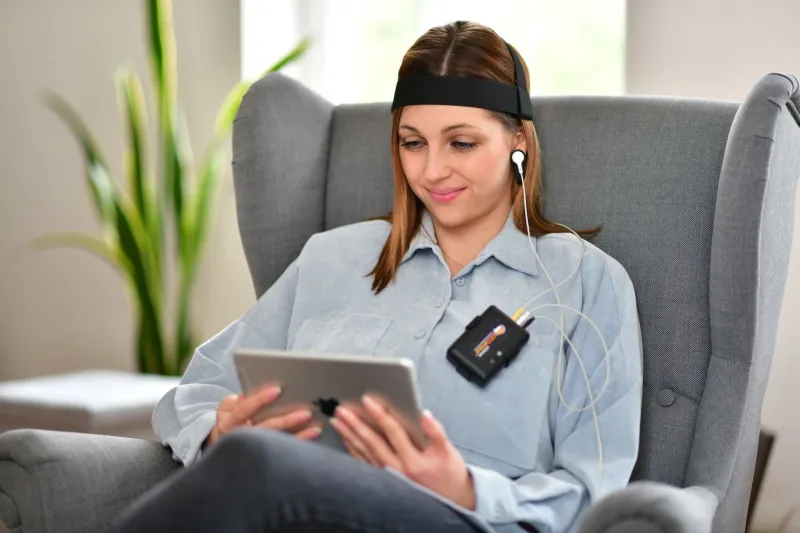
The devices at the center of this expansion rely primarily on electroencephalography — EEG — a century-old technique that detects electrical activity across the brain's outer layers. Earlier EEG equipment was cumbersome, clinical, and required trained operators. Modern iterations, however, have been miniaturized into form factors resembling consumer headphones or athletic headbands. Companies including Neurosity, Emotiv, and Muse have already brought consumer-grade EEG hardware to market, with applications ranging from meditation coaching to workplace productivity monitoring.
What distinguishes the current generation of devices is not merely their form factor but the sophistication of the machine learning pipelines processing their output. Raw EEG signals are notoriously noisy and highly individual. Advances in signal processing and neural decoding algorithms have made it increasingly feasible to extract reliable indicators of cognitive states — focus, fatigue, stress, and emotional valence — from data that would previously have been unintelligible. The result is a product that can translate the electrical murmur of a person's brain into a structured, quantifiable metric.
For advertisers, that metric represents something unprecedented: a real-time window into whether a message has genuinely registered, not merely whether it appeared on a screen.
The Commercial Architecture of Cognitive Surveillance
The business models taking shape around this technology are varied, but several dominant patterns have emerged. In the enterprise sector, employers are exploring neurofeedback tools that purport to optimize worker concentration and identify cognitive fatigue before it degrades performance. In the media and advertising industry, research firms are deploying neural measurement in controlled studies to test content effectiveness at a neurological level, replacing self-reported surveys with direct biological feedback.
Perhaps most consequentially, a subset of startups is developing ambient neural monitoring as a feature embedded within consumer electronics. The vision, articulated openly by several founders at recent industry conferences, is a persistent layer of cognitive awareness woven into everyday devices — headphones that know when your attention has drifted, interfaces that adapt in real time to your mental state, and platforms that use neural engagement scores to personalize content delivery with a precision no behavioral algorithm can match.
The commercial logic is compelling, and the investment appetite reflects it. Neurotechnology as a sector attracted over three billion dollars in venture funding globally in 2023 alone, with a significant concentration in companies whose products sit at the intersection of consumer electronics and cognitive data.
The Regulatory Vacuum
What is conspicuously absent from this expanding market is a coherent legal framework governing the collection, storage, and commercial use of neural data. The United States currently has no federal statute specifically addressing neurotechnology. The Health Insurance Portability and Accountability Act covers medical records but does not apply to consumer wellness devices. The Federal Trade Commission's general authority over deceptive trade practices provides only a weak backstop against the misuse of cognitive data.
A small number of states have begun to act independently. Colorado, Minnesota, and most notably California have enacted or proposed legislation classifying neural data as a protected category of sensitive personal information. Washington state passed the My Health My Data Act in 2023, which extends privacy protections to consumer health data including neural signals. These measures represent meaningful progress, but their patchwork nature creates an uneven landscape that sophisticated companies can navigate through jurisdictional strategy.
The deeper regulatory challenge is definitional. Brain-computer interface products marketed as wellness tools or productivity aids do not necessarily trigger the scrutiny applied to medical devices. A company selling a focus-enhancing headset occupies an ambiguous regulatory space — consumer product by form, neurological instrument by function. Until federal agencies clarify jurisdictional boundaries, that ambiguity will continue to serve commercial interests over individual protections.
The Question of Consent
Beyond regulation lies a more fundamental question about what meaningful consent looks like when the data being collected is neurological in nature. Privacy scholars have long argued that conventional consent frameworks — the scroll-past terms-of-service agreement — are inadequate for sensitive personal data. For neural data, the inadequacy is of an entirely different order.
Cognitive signals can reveal information that individuals may not consciously know about themselves: early indicators of neurological conditions, emotional responses to political content, susceptibility to persuasive framing. A user consenting to share engagement data with a productivity app may have no reasonable basis for anticipating how deeply that data could characterize their inner life, or what secondary markets it might eventually reach.
Researchers at institutions including MIT and Carnegie Mellon have published work examining the inference potential of consumer EEG data, demonstrating that even low-resolution neural recordings can be used to reconstruct aspects of emotional state and cognitive preference that users did not intend to disclose. The gap between what users believe they are sharing and what the data actually contains is, in this domain, potentially vast.
Resistance and the Path Forward
Not all responses to this trajectory are passive. A growing community of digital rights advocates, neuroscientists, and civil liberties organizations has begun coalescing around the concept of cognitive liberty — the principle that mental privacy constitutes a fundamental right, not merely a preference. The Neurorights Foundation, established by Columbia neuroscientist Rafael Yuste, has lobbied successfully for constitutional neurorights protections in Chile and continues to press for international norms.
In the United States, a coalition of researchers and policy advocates has called on Congress to establish a dedicated regulatory framework for neurotechnology that addresses data minimization, purpose limitation, and the prohibition of certain commercial uses of neural data altogether. Whether that call produces legislative action in the current political environment remains uncertain.
What is certain is that the window for establishing meaningful guardrails is narrowing. The devices are already on the market. The data pipelines are already operational. The commercial incentives are already substantial.
The attention economy began by competing for what you watched and what you clicked. Its next iteration aims to know, with biological precision, what truly moved you — and to sell that knowledge before you have had the opportunity to decide whether it was yours to give.
The mind, it turns out, is the last untapped inventory. And the bidding has already begun.