Minds on the Market: The Quiet Race to Monetize Human Memory Through Brain-Mapping Technology

Photo by Photo by Md. Alif Hasnat Ovi on Unsplash on Unsplash
For decades, the most private territory a person could claim was not a locked room or an encrypted hard drive—it was the mind itself. Memory, the deeply personal archive of lived experience, felt categorically immune to commercial extraction. That assumption is eroding faster than most Americans realize.
A convergence of high-resolution neuroimaging, machine learning, and miniaturized biosensor technology is enabling researchers—and increasingly, private enterprises—to decode the structural and functional signatures of human memory with a precision that would have seemed implausible a generation ago. What was once the exclusive domain of academic neuroscience is now attracting venture capital, corporate R&D divisions, and a growing ecosystem of startups eager to transform cognitive data into commercial currency.
From Laboratory to Marketplace
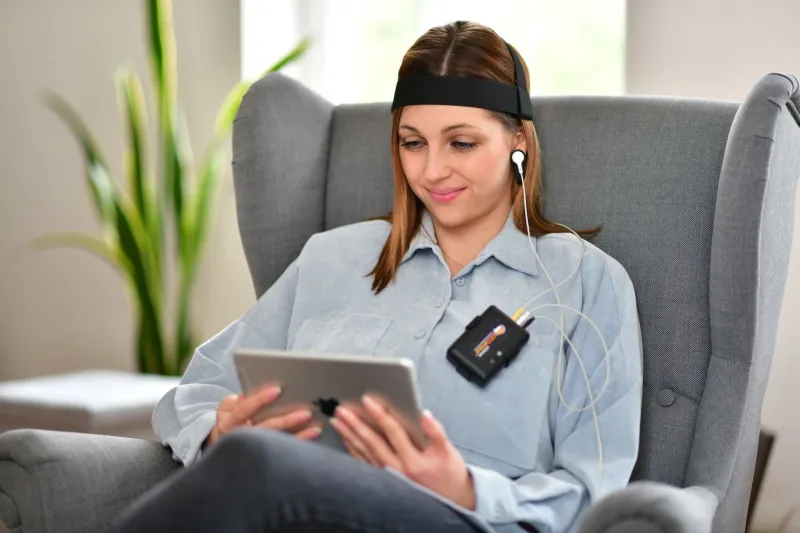
The foundational science is legitimate and, in many respects, genuinely promising. Functional MRI studies have long demonstrated that distinct memory patterns leave measurable traces in brain activity. More recent developments—including portable electroencephalography headsets, implantable neural arrays, and AI-driven pattern recognition—have compressed the gap between laboratory-grade neuroimaging and consumer-accessible devices.
Companies operating in the broader neurotechnology space, including well-funded American startups and established medical device manufacturers, have begun marketing products that collect granular neural data under the banner of wellness, productivity enhancement, and cognitive health monitoring. The pitch is compelling: wear a device, understand your brain, optimize your life. The data collection, however, extends well beyond what most users appreciate when they agree to a terms-of-service document.
Neuroimaging research published in journals such as Nature Neuroscience has demonstrated that machine learning models can reconstruct elements of a person's recalled experiences—including visual imagery and emotional valence—from brain activity signatures alone. The leap from academic demonstration to commercial application is not as distant as it once appeared.
The Architecture of a New Data Market
To understand why memory data is commercially valuable, it helps to consider what it reveals. Unlike behavioral data—the clicks, searches, and purchase histories that have long fueled the digital advertising economy—neural memory data speaks directly to preference formation, emotional response, and the subconscious associations that shape decision-making. For advertisers, insurers, employers, and political actors, access to that layer of human cognition would represent an extraordinary informational advantage.
Several business models are already emerging, even if they remain nascent. Consumer neurotechnology companies routinely retain the neural datasets generated by their devices, often with contractual language granting broad rights to aggregate, analyze, and license that information. Cognitive health platforms are building longitudinal datasets that map memory function over time—datasets that carry obvious value to pharmaceutical companies developing treatments for Alzheimer's and related conditions, but that also represent detailed portraits of individual cognitive decline.
Perhaps most consequentially, the integration of neural data with existing behavioral and biometric profiles creates the possibility of what researchers have begun calling "cognitive fingerprinting"—a composite identifier so granular that it may prove impossible to anonymize in any meaningful sense.
The Regulatory Void
The United States currently has no federal statute specifically governing the collection, storage, or commercial use of neural data. The Health Insurance Portability and Accountability Act offers protections in clinical contexts, but consumer neurotechnology products frequently operate outside those boundaries. The Federal Trade Commission retains broad authority over deceptive data practices, but has yet to articulate a comprehensive framework for neural information.
A small number of states have begun to act. Colorado, Virginia, and most notably Minnesota have introduced or passed legislation extending data protection rights to neural and biometric information. Illinois' Biometric Information Privacy Act, though not neural-specific, has been invoked in cases involving brain-derived data and has demonstrated that litigation can impose meaningful constraints on corporate behavior. But these efforts remain fragmented, and the patchwork of state-level protections offers little coherent defense against a national or global market.
Industry self-regulation has not filled the gap. The NeuroRights Foundation, a Columbia University-affiliated advocacy organization, has pushed for the recognition of "cognitive liberty" as a fundamental right—the idea that mental processes deserve the same constitutional protection as speech or assembly. The concept has gained traction in international human rights discourse, particularly in Chile, which amended its constitution in 2021 to include explicit neurorights protections. In the United States, however, the conversation has barely begun in legislative chambers.
Consent and Its Discontents
The consent frameworks currently governing neural data collection are, by most assessments, inadequate to the task. Standard informed-consent models were designed for a world in which data subjects could reasonably understand what they were agreeing to share. Neural data, by contrast, may reveal information that the individual never consciously intended to disclose—and may not even be aware they possess.
Consider the implications for memory specifically. A device that monitors neural activity during periods of emotional recollection may capture data reflecting trauma history, political beliefs, religious experience, or intimate relationships—none of which the user would voluntarily report to a corporation. The consent obtained for "cognitive wellness monitoring" does not meaningfully address this depth of exposure.
Ethicists and legal scholars have increasingly argued that the notice-and-consent model, already under strain from decades of digital data collection, is fundamentally unsuited to neural data. The asymmetry of understanding between a neurotechnology company and its average consumer is simply too vast for a checkbox to bridge.
The Stakes of Inaction
The commercial logic driving this market is not difficult to follow. Neural data is scarce, deeply informative, and currently underprotected—a combination that makes it extraordinarily attractive to investors and acquirers. The companies accumulating these datasets today are positioning themselves for a future in which memory-derived insights inform everything from personalized medicine to behavioral nudging at a scale that dwarfs anything the social media era produced.
What is less certain is whether the public, or the institutions charged with protecting it, will recognize the nature of the transition before it has fully occurred. The history of digital privacy suggests grounds for concern: the commercial infrastructure of behavioral surveillance was largely built before most Americans understood what was being constructed, and dismantling it has proven enormously difficult.
Memory is not merely data. It is the substrate of identity, the record of relationships, the architecture of the self. The prospect of that substrate becoming a tradeable asset—mapped, packaged, and sold without meaningful consent—represents a qualitative shift in the relationship between individuals and the institutions that seek to profit from their inner lives.
The technology to illuminate the mind has arrived. The question now is who controls the light—and who is left in the dark.