Quietly Watching: How the Connected Devices in Your Home Became a Surveillance Network You Never Agreed To
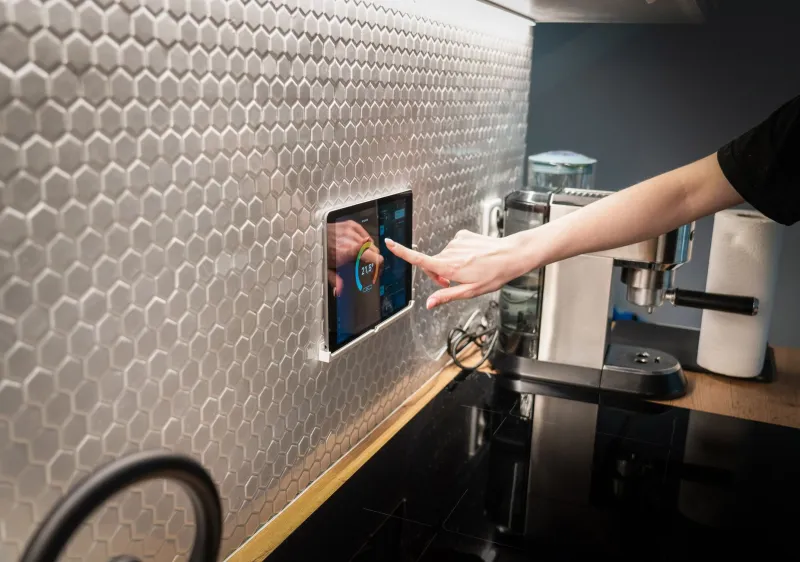
There is a particular kind of transparency that modern technology performs well: the kind that appears on the surface while obscuring everything underneath. Your smart coffee maker tells you when the brew is ready. Your fitness tracker celebrates when you close your activity ring. Your connected thermostat learns your preferred temperature and adjusts accordingly. What none of these devices advertise, however, is the parallel function they perform continuously in the background—cataloguing your habits, your schedules, your behavioral patterns, and transmitting that information to servers you will never visit, managed by companies whose names may never appear on the product you purchased.
This is not a fringe concern. It is the operating architecture of the modern consumer electronics industry.
The Sensor Economy Hidden in Plain Sight
The proliferation of embedded sensors in consumer products has accelerated dramatically over the past decade. Industry analysts estimate that the number of connected devices in the United States alone surpassed 25 billion in 2023, a figure that encompasses everything from smart televisions and voice-activated speakers to baby monitors, door locks, and kitchen scales. Each of these devices contains some combination of microphones, accelerometers, gyroscopes, infrared sensors, cameras, or wireless transceivers—hardware components whose primary commercial value often lies not in the features they enable for the user, but in the behavioral data they generate for the manufacturer.
Consider the humble fitness tracker. On the surface, it counts steps and monitors heart rate. Beneath that interface, however, it is capturing sleep duration and quality, resting heart rate variability, movement signatures throughout the day, geographic location data, and the precise times at which the wearer is sedentary, active, or asleep. Aggregated across millions of users, this data constitutes an extraordinarily granular behavioral dataset—one that carries substantial commercial value for health insurers, pharmaceutical companies, advertisers, and research institutions.
Similar logic applies to appliances that appear far less personal. A connected washing machine records cycle frequency and duration. A smart refrigerator logs door-opening patterns. A robotic vacuum maps the physical layout of your home with centimeter-level precision. Individually, these data points may seem inconsequential. Assembled into a profile over months or years, they form a detailed record of how a household actually lives—information that is, in many respects, more revealing than anything a user would willingly disclose.
Where the Data Goes
The journey data takes after leaving a device is rarely explained in accessible terms. Manufacturers typically address this in privacy policies—documents that run to thousands of words, are written in legal language calibrated to protect the company rather than inform the consumer, and are accepted by the overwhelming majority of users without being read.
Within those documents, the permissible uses of collected data are often defined expansively. Phrases such as "improve our services," "personalize your experience," and "share with trusted partners" function as elastic clauses that can accommodate a wide range of third-party data transfers. In practice, device data frequently flows to advertising technology platforms, data brokers, cloud analytics providers, and in some cases government agencies operating under legal process. The consumer who purchased a $40 smart plug to automate their lamp has, in effect, enrolled in a data relationship whose full scope was never surfaced during the transaction.
Researchers at academic institutions including Princeton and Carnegie Mellon have documented this data flow architecture in detail. Studies have shown that popular smart home devices regularly communicate with dozens of external domains, many of which have no apparent relationship to the device's advertised function. Traffic analysis has revealed connections to advertising networks, analytics firms, and data aggregators embedded within the operational software of products marketed as simple household utilities.
The Awareness Gap
Perhaps the most consequential dimension of this phenomenon is how little most Americans understand about it. Surveys conducted by the Pew Research Center have consistently found that while a majority of US adults express concern about data privacy in the abstract, far fewer can accurately describe what data their devices collect, who receives it, or what rights they retain under existing law.
This awareness gap is not accidental. The user experience design of connected products is deliberately optimized to foreground utility and minimize friction—and by extension, to minimize the moments at which a user might pause to consider the data exchange they are entering. Setup flows are streamlined. Consent is bundled. Permissions are requested in ways that make declining feel like losing access to the product's core functionality. The architecture of the onboarding experience is, in many cases, an exercise in manufactured consent.
Federal regulation has not kept pace with this landscape. The United States lacks a comprehensive national consumer data privacy law. The patchwork of state-level legislation—most notably the California Consumer Privacy Act and its successor, the CPRA—provides meaningful protections for some residents but leaves the majority of Americans with limited recourse. The Federal Trade Commission has pursued enforcement actions against specific companies for egregious violations, but the broader structural practice of ambient data collection through consumer devices remains largely unaddressed at the legislative level.
What Accountability Could Look Like
There are emerging frameworks worth watching. The concept of data minimization—requiring that devices collect only the information strictly necessary for their stated function—has gained traction in European regulatory discourse and is beginning to surface in US policy conversations. Mandatory, standardized privacy labels for connected devices, analogous to nutritional labels on food products, have been proposed by researchers and advocacy organizations as a mechanism for enabling informed consumer choice at the point of purchase.
On the technical side, local processing architectures—in which sensor data is analyzed on the device itself rather than transmitted to external servers—represent a design philosophy that could substantially reduce the volume of data leaving the home. Some manufacturers have begun adopting this approach, though it remains the exception rather than the standard.
Consumer awareness, too, is a form of infrastructure. Understanding that a device is connected does not require technical expertise; it requires only the habit of asking what a product does with the information it gathers, and whether the answer is one you find acceptable.
The Lucent Question
Technology earns its place in daily life by delivering genuine value. The connected devices that have become fixtures in American homes offer real convenience, real utility, and in some cases real health and safety benefits. None of that utility requires the silent, expansive data collection practices that have become standard across the industry. The question is not whether these devices belong in the home—it is whether the terms on which they operate are ones that consumers have genuinely chosen, or ones that have been quietly imposed while attention was directed elsewhere.
Clarity about what technology does—not just what it claims to do—is the foundation of any meaningful relationship between innovation and the people it serves. That clarity is currently in short supply.